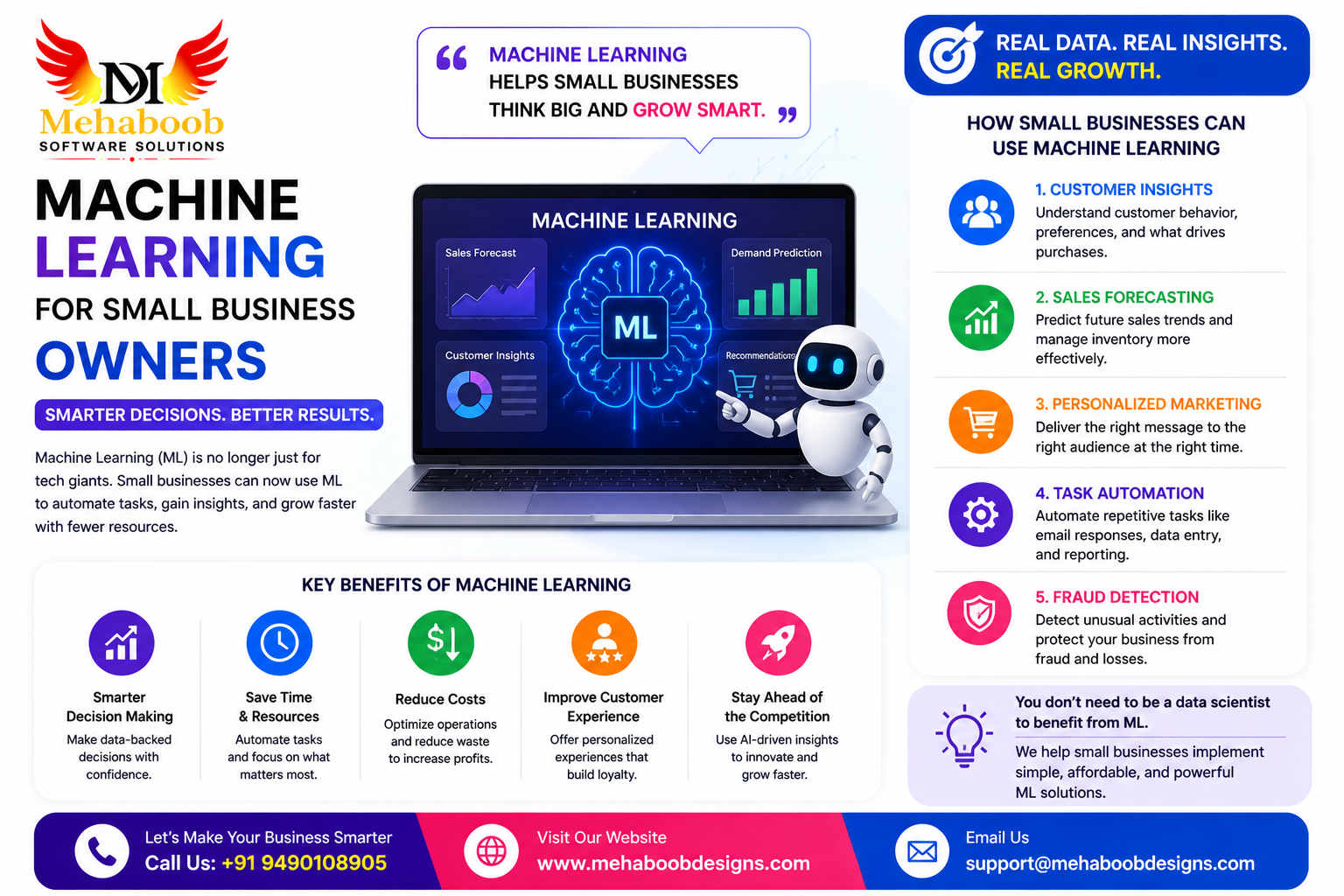
Machine Learning (ML) is no longer exclusive to tech giants. In 2026, small businesses can access powerful ML tools that automate processes, predict customer behavior, and drive growth. This guide shows you practical ways to implement ML in your business.
1. What is Machine Learning?
Machine Learning is a subset of AI that enables systems to learn from data and improve without explicit programming. For small businesses, this means automated decision-making, pattern recognition, and predictive capabilities.
ML Applications for Small Businesses:
- Customer Segmentation: Automatically group customers by behavior
- Sales Forecasting: Predict future sales based on historical data
- Fraud Detection: Identify suspicious transactions
- Inventory Optimization: Predict demand and manage stock levels
2. Affordable ML Tools for Small Business
Cloud-based ML platforms have made advanced analytics accessible to businesses of all sizes. Tools like Google AutoML, Amazon SageMaker, and Microsoft Azure ML offer pay-as-you-go pricing.
Recommended ML Platforms:
- Google AutoML: Build custom ML models without coding
- HubSpot AI: Marketing automation and lead scoring
- Salesforce Einstein: CRM with built-in AI capabilities
- Zoho AI: Affordable AI for small business operations
3. Customer Insights and Personalization
ML analyzes customer data to uncover patterns and preferences, enabling personalized marketing, product recommendations, and targeted promotions.
4. Process Automation
Automate repetitive tasks like data entry, email responses, appointment scheduling, and customer support using ML-powered tools.
5. Getting Started with ML
Start small: identify one business process that could benefit from automation or prediction. Use pre-built ML tools before investing in custom solutions.
🤖 Ready to Implement ML in Your Business?
Our ML experts can help you identify opportunities and implement affordable machine learning solutions.
Get ML Consultation